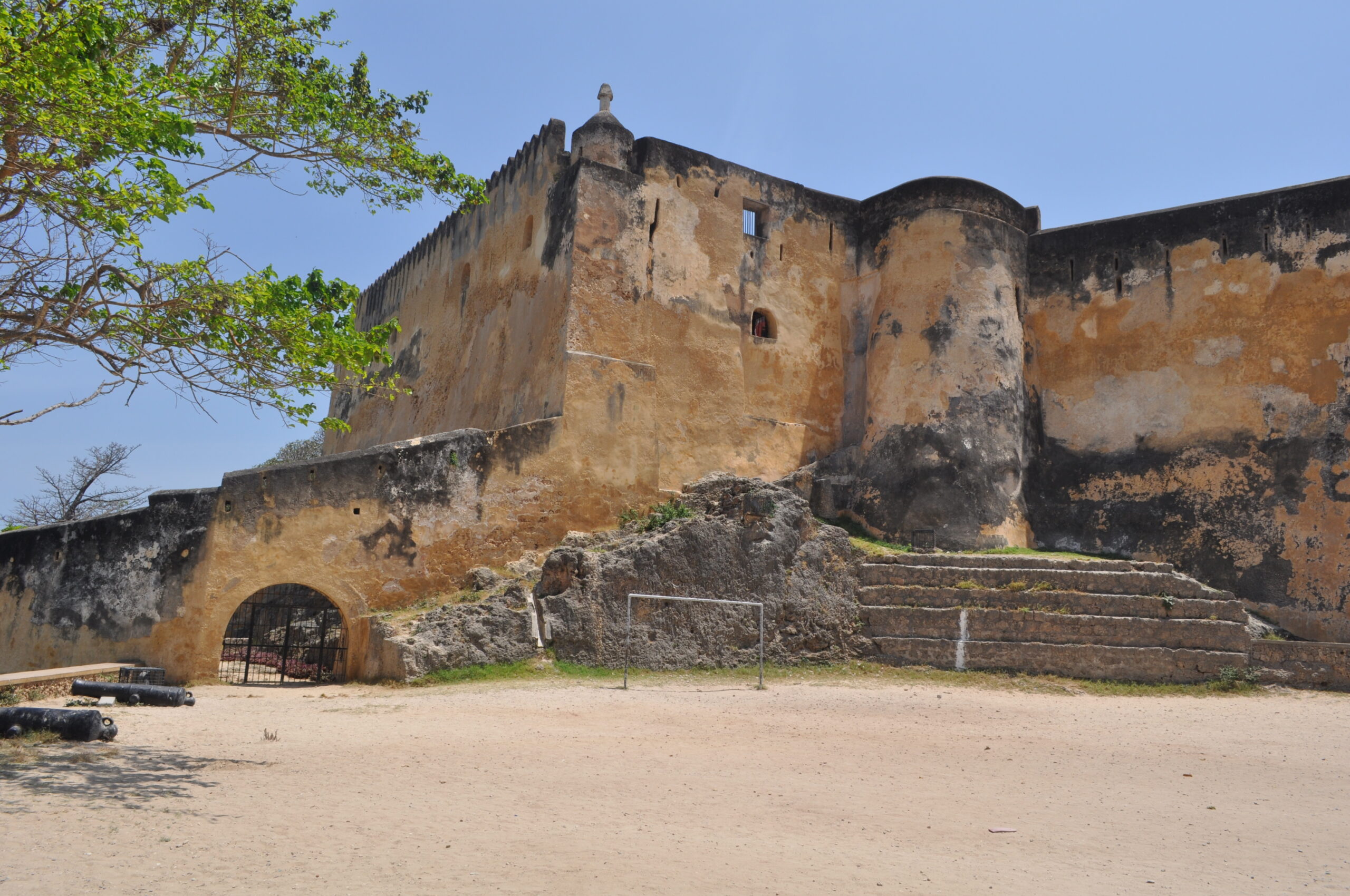
Most Mombasa trips get compressed into a single line on a Kenya itinerary – “add a few beach days on the coast” – and the beach really is worth it. But Mombasa itself, the island city the beaches are named after, has 500 years of Swahili, Arab, Portuguese and British history packed into a few square kilometres, plus one of Kenya’s best food scenes. This is the deeper dive for the day or two most visitors spend in the city before or after the sand.
A layered history
Mombasa has been a trading port for over a thousand years, sitting on the Indian Ocean routes that connected East Africa to Arabia, Persia and India. Swahili city-state culture – a fusion of African, Arab and Persian influence built on that trade – shaped the town long before European contact. The Portuguese arrived in 1498 and eventually built Fort Jesus between 1593 and 1596 to control the harbour; Omani Arab forces besieged and captured it in one of the longest sieges in African colonial history, from 1696 to 1698, and Omani rule followed for much of the next two centuries. The British made Mombasa the capital of colonial Kenya before shifting administration to Nairobi, and the city’s mixed Swahili-Arab-Indian-British architectural and cultural layers are still the main reason to walk its streets today.
Fort Jesus and Old Town
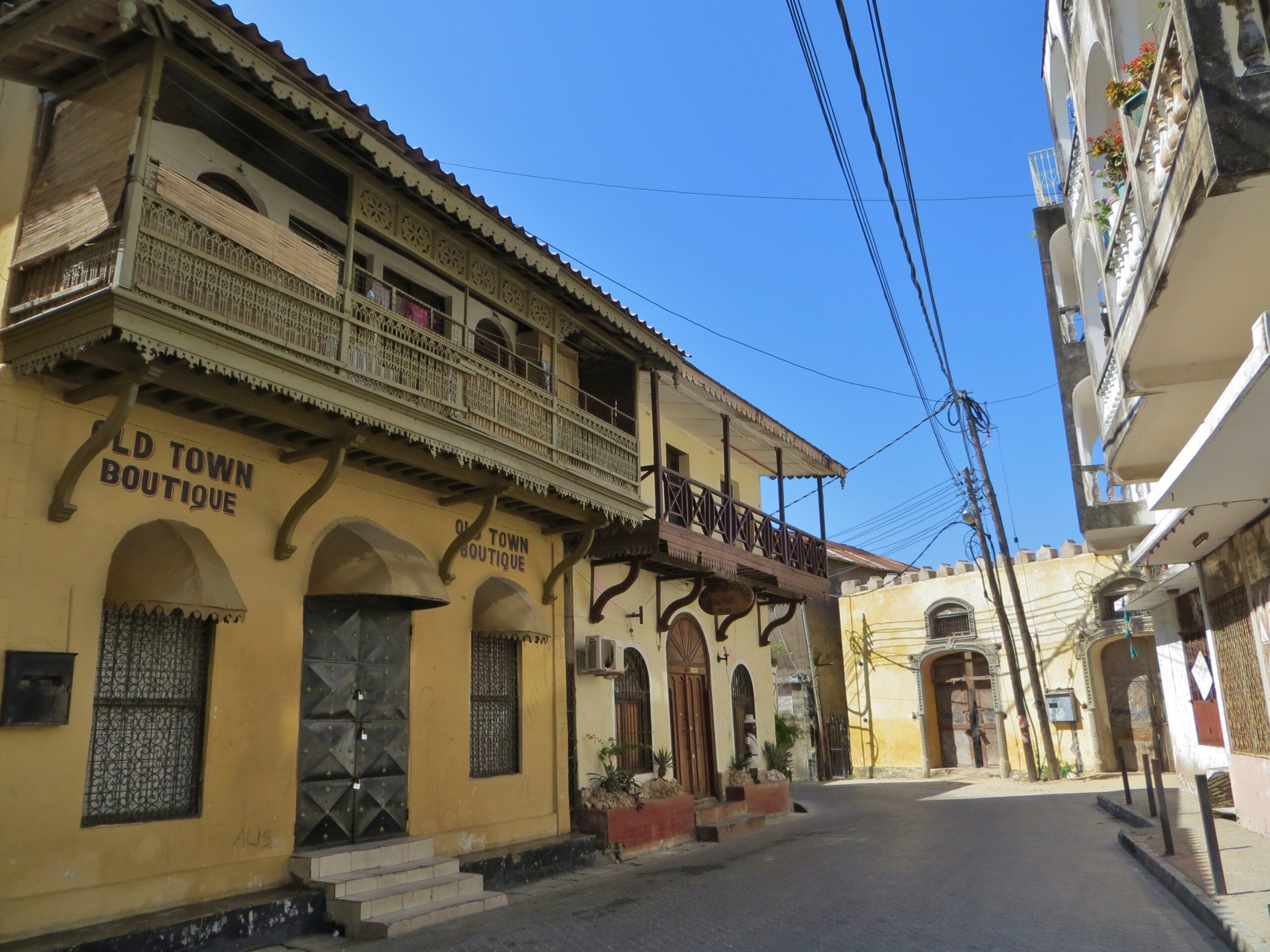
Fort Jesus, a UNESCO World Heritage Site since 2011, is the obvious anchor – designed by Italian architect Giovanni Battista Cairati in the shape of a man viewed from above, it now houses a museum covering the fort’s Portuguese, Omani and British occupations. Give it an hour or two, then walk into Old Town itself: narrow coral-stone streets, elaborately carved wooden doors (a status marker historically tied to a family’s wealth and standing), balconied Swahili-Arab houses, and a functioning neighbourhood rather than a museum piece – people still live, trade and pray here. It rewards slow wandering more than a checklist, and a local guide is worth it for the history behind the doors and buildings you’d otherwise walk past.
Mombasa’s neighbourhoods
Old Town. The historic core on the island’s east side, overlooking the Old Port and Fort Jesus – history, architecture and the city’s best traditional Swahili food, but limited beach-hotel infrastructure.
Nyali. Just across Nyali Bridge on the mainland north of the island, Nyali is Mombasa’s most convenient upscale base – beach hotels, malls, and the city’s densest restaurant scene, close enough to Old Town for an easy day trip in.
Bamburi and Shanzu. Further up the North Coast, with a longer run of beach and higher-volume beach-resort restaurants and water sports, popular with both tourists and Mombasa residents on weekends.
Kizingo and Mombasa Island’s town centre. The commercial CBD and government quarter, useful for practicalities (banks, SGR connections) rather than sightseeing.
Likoni. The mainland ferry crossing point south of the island – the transit hub for reaching Diani Beach and the South Coast, and a slice of everyday Mombasa life in its own right (Likoni’s ferry crossing carries tens of thousands of pedestrians, cars and boda-bodas every day).
Mosques and churches worth a look
Old Town’s religious architecture is as layered as everything else about it. Mandhry Mosque, on Sir Mbarak Hinawy Road, is generally reckoned the oldest mosque still in continuous use in the city, founded by Omani settlers around 1570 and named for the clan that has maintained it ever since – predating Fort Jesus itself, and built, unusually, with two mihrabs (prayer niches marking the direction of Mecca), a feature shared with only one other mosque in the world. It isn’t generally open to non-Muslim visitors inside, but the coral-stone facade and rounded minaret are worth seeking out on a walk through Old Town. A short walk away, Mombasa Memorial Cathedral, the Anglican cathedral for the diocese since 1898, and the Catholic Holy Ghost Cathedral both reflect the city’s British-era Christian presence layered on top of thirteen centuries of Islamic and Swahili history – visible proof that Mombasa’s cosmopolitan reputation isn’t just a marketing line.
What to eat
Swahili cuisine is Mombasa’s best argument for a longer stay – centuries of Arab, Indian and African trade compressed into one plate. Look for biryani ya kuku (a distinctly Swahili take on chicken biryani, layered and fragrant rather than the drier Indian style), pilau (spiced rice cooked with meat, cloves, cardamom and black pepper), samaki wa kupaka (grilled fish – often snapper or kingfish – finished in a coconut, lime and turmeric sauce), and mshikaki (marinated grilled meat skewers) as street food. For breakfast, mahamri (cardamom-scented coconut doughnuts) with mbaazi (pigeon peas in coconut milk) and sweet spiced chai is the local standard, and viazi karai (spiced, batter-fried potatoes) makes a good street-food snack any time of day. Old Town has the most historic Swahili-Indian cooking; Nyali has the widest range of sit-down restaurants; Bamburi and Shanzu lean toward beach-resort dining.
Beyond the city
Haller Park. A former limestone quarry turned nature reserve near Bamburi, with giraffes, hippos, buffalo and a walk-through reptile park – a relaxed half-day, especially good with kids.
Mombasa Marine National Park. A protected reef off Nyali and Bamburi reachable by glass-bottomed boat, good for snorkelling among coral gardens close to shore.
Wasini Island and Kisite-Mpunguti Marine Park. A longer day trip south past Diani, known for dolphin-watching boat trips, snorkelling on one of Kenya’s best coral reefs, and a seafood lunch on the island.
Shimba Hills National Reserve. Forested hills inland from Diani with the rare sable antelope and Sheldrick Falls – a change of pace from beach and Old Town if you have an extra day.
Getting around
Mombasa Island is compact enough to walk in Old Town, but tuk-tuks (locally “tuktuk”) and matatus cover the rest of the city cheaply. The Likoni ferry (free, frequent, and often crowded) is the main link to the South Coast and Diani; a longer-planned floating bridge has been proposed to ease the crossing but the ferry remains the standard route for now. Ride-hailing apps work reliably within the city and North Coast suburbs.
Getting there
Domestic flights connect Nairobi to Mombasa in about an hour and run frequently throughout the day – the easiest option for most itineraries. The SGR (Standard Gauge Railway) is a scenic overland alternative, taking roughly five hours between the two cities. From the Maasai Mara or Amboseli, flying via Nairobi rather than attempting a direct overland connection is the standard approach.
Best time to visit
December to March and July to October are the driest, most reliable windows on the coast; expect the heaviest rain roughly April to June, with a shorter secondary wet spell around November.
FAQ
Is a day enough for Old Town and Fort Jesus? A half-day covers the highlights; a full day gives you time to wander without rushing and add a proper Swahili lunch.
Should I base myself in Old Town or Nyali? Nyali or the North Coast suburbs suit most travellers better – easy access to Old Town for sightseeing, with far more choice for beach hotels, restaurants and evening options.
Is the Likoni ferry safe for tourists? Yes, though it gets very crowded at peak commuting hours – keep valuables secure and expect a wait if you’re crossing with a vehicle at busy times.
Related
- Mombasa Travel Guide — the essentials for planning your trip
- Diani Beach Travel Guide — Kenya’s top beach resort area
- Kenya Travel Guide — plan the wider trip
Leave a Reply