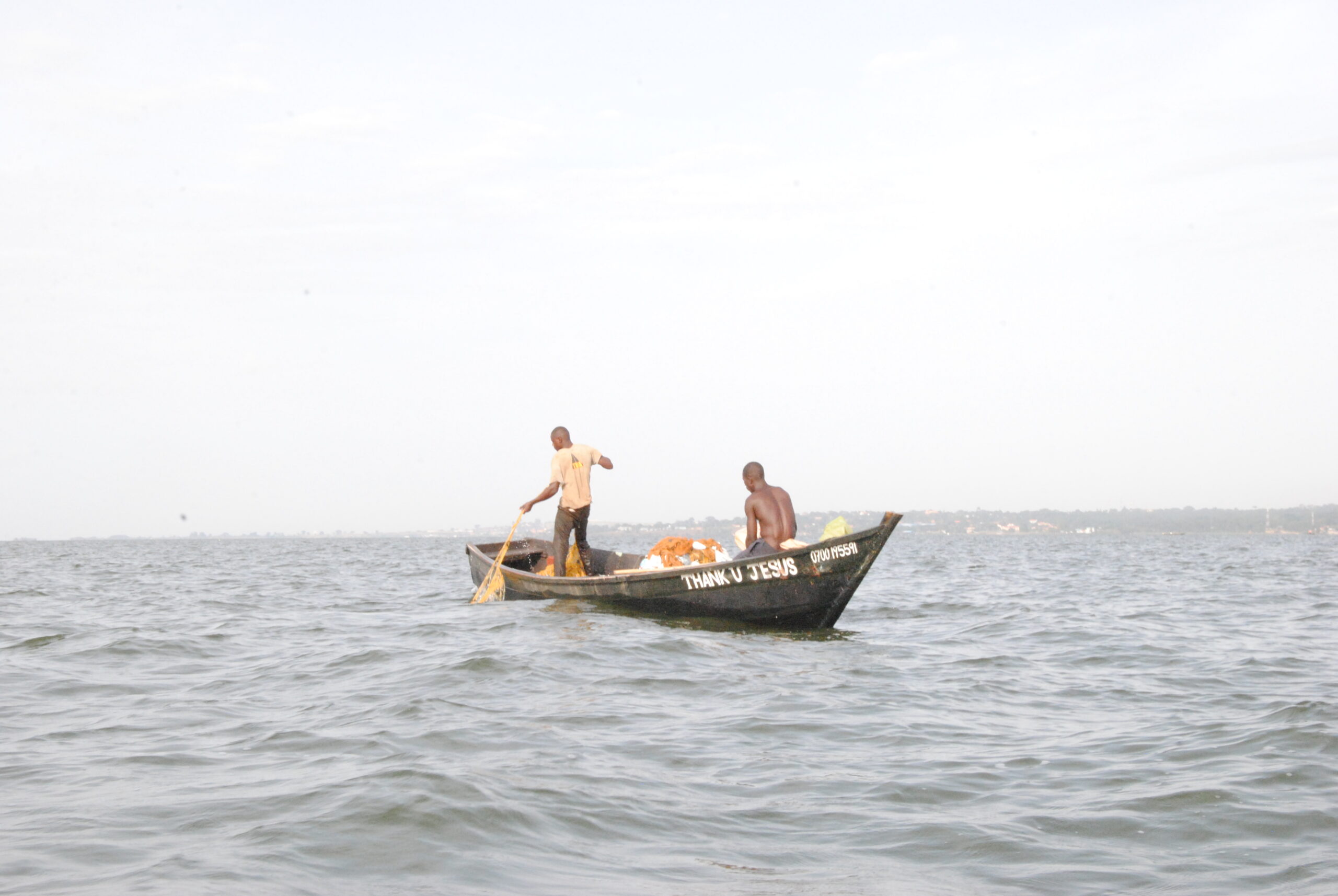
Homa Bay sits on the southern shore of the Winam Gulf, the arm of Lake Victoria that reaches deepest into Kenya, and everything about the town runs on lake time. Boats go out before dawn, land their catch by mid-morning, and by noon the fish has already changed hands two or three times on its way from net to plate. It’s one of Kenya’s most productive fishing grounds and one of its least-visited county capitals — which is exactly what makes it worth the detour off the Kisumu-Kisii road.
Where the big fish come in
The single best reason to stop in Homa Bay is to watch the catch come ashore. Nile perch, introduced into Lake Victoria in the 1950s, is the fish that built the modern economy of this shoreline — it can grow to well over 100kg and two metres long, and even an average market-day fish arrives on a bicycle or a porter’s shoulders looking genuinely enormous next to everything around it. Fishermen bring their catch in at landing sites like Koginga Beach, on the edge of town, where it’s sorted, weighed and sold on within hours. Homa Bay’s fish market, rebuilt and reopened in 2025 as one of the largest and most modern facilities on the lake, now handles thousands of traders a day, with cold storage and proper washing areas replacing what used to be an open beachside scramble.
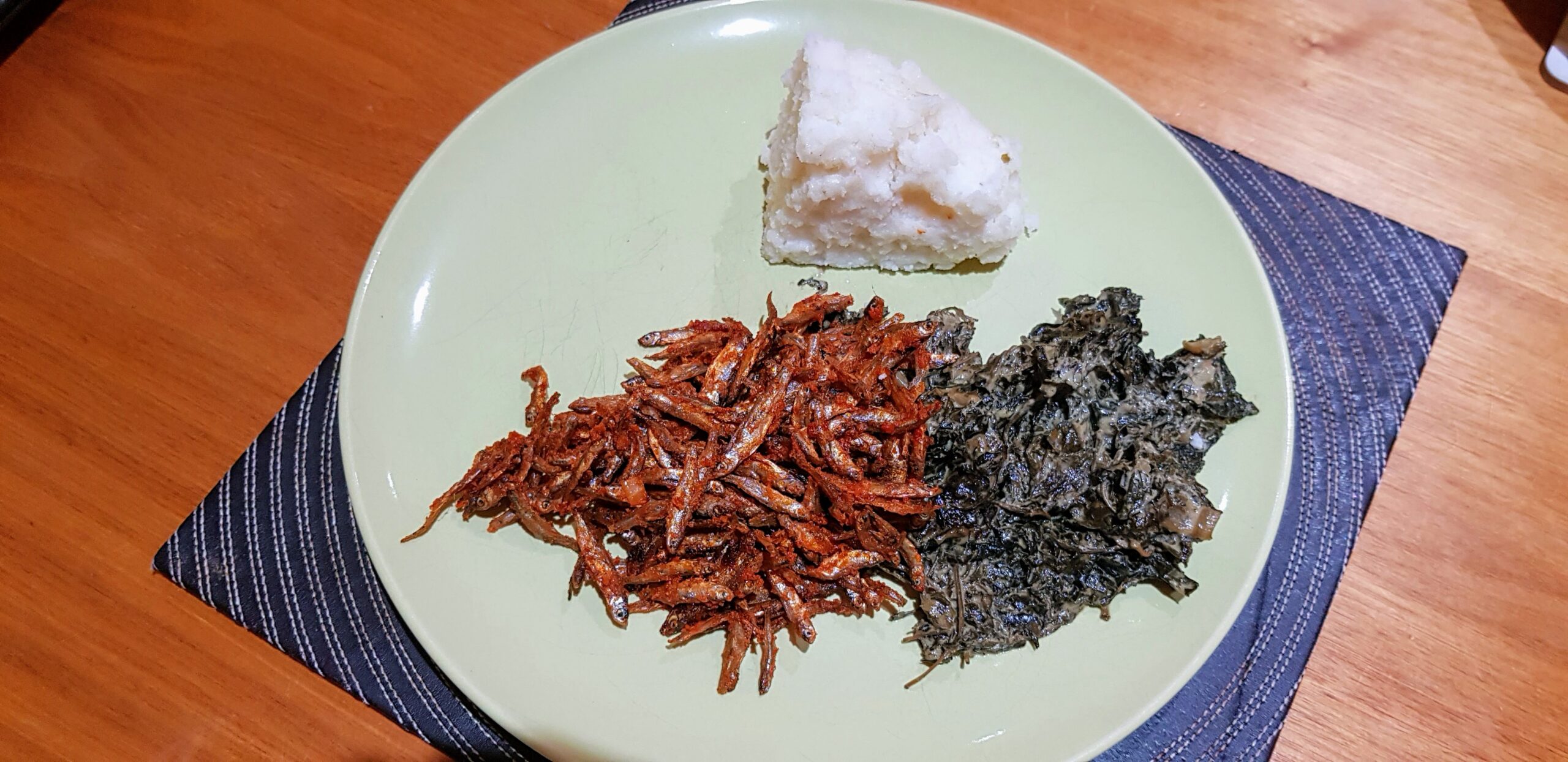
Watching a big Nile perch land is a proper spectacle: it usually takes two people to carry one, scales flashing silver-grey in the sun, and a crowd of buyers, fishmongers and onlookers gathers before the boat has even beached. Alongside the perch, women sort mountains of omena (silver cyprinid, a small sardine-like fish) into baskets for drying and frying — it’s the everyday protein of the lake region, sun-dried on raised racks along the shore and sold by the tin rather than the kilo. Tilapia and catfish round out the catch, laid out on wooden tables between the two.
There’s a less visible trade running alongside the visible one. Nile perch swim bladders, known locally as mondo, are cut out and sold separately to Chinese buyers for use in soup and traditional medicine — a kilo of maw can fetch far more than a kilo of the fish itself, which is part of why Homa Bay’s fisheries officers keep a close watch on undersized catches. None of this is hidden from view exactly, but it’s the kind of detail a market walk with a local will explain far better than a guidebook can.
Kendu Bay
About 30km northeast of Homa Bay town, Kendu Bay is a smaller, older lakeside settlement with a genuinely strange landmark just outside it: Lake Simbi Nyaima, a near-perfectly circular crater lake with no known inlet or outlet, ringed by acacia scrub and, in season, thousands of migrating flamingos arriving from the Rift Valley soda lakes. Luo oral tradition holds that a village once stood on the site and was swallowed overnight after its residents turned away an old woman asking for food and shelter — only the family that helped her survived, and the lake rose where the village had been. Geologists offer a more prosaic explanation involving a volcanic crater roughly six centuries old, but both accounts agree on one thing: something happened here that the landscape still remembers.
Kendu Bay itself was once a significant port, with a pier that received steamers from as far as Uganda and Tanzania during the colonial era, and a lakeside show ground that made it, for a period, the entertainment capital of Nyanza. Both have faded, but the town remains a working fish landing point in its own right, smaller and quieter than Homa Bay’s rebuilt market but with the same rhythm of boats, buyers and baskets each morning.
The Abasuba, a different people on the lake
Rusinga and Mfangano aren’t just Luo territory with a fossil site and a mausoleum attached — they’re the heartland of the Abasuba (Suba), a Bantu people distinct from the Nilotic Luo who dominate the rest of Homa Bay County. Suba tradition holds that small clan groups crossed the lake by boat from the Buganda and Busoga side of Uganda, beginning around the 16th to 18th centuries, and settled these islands and pockets of the eastern shore before the Luo arrived in the area in numbers. Centuries of intermarriage and shared fishing life mean most Suba on the mainland now speak Luo as a first language and are often called Luo-Abasuba, but the islands — Mfangano especially — still hold onto Suba language, clan totems and a cultural identity distinct from their Luo neighbours. The annual Rusinga Festival exists specifically to keep that identity visible; if the timing lines up, it’s a far richer way to understand the islands than a fossil-and-mausoleum day trip alone.
Beyond the market
Ruma National Park. Kenya’s only park in the former Nyanza Province, about an hour from Homa Bay town in the Lambwe Valley. It’s the last stronghold of the roan antelope in Kenya, alongside Jackson’s hartebeest, buffalo, and reintroduced giraffe — and one of the quietest, least-crowded parks in the country.
Rusinga Island. Connected to the mainland near Mbita by a causeway, Rusinga holds the mausoleum of Tom Mboya, one of Kenya’s most influential independence-era leaders, and some of the richest early-hominin fossil sites in East Africa.
Mfangano Island. Further out into the lake, reachable by boat, with ancient rock art sites attributed to the Twa people who lived here before the Luo migration.
Getting there
Homa Bay is roughly 110km (2-2.5 hours) from Kisumu and about 350km (6-7 hours) from Nairobi by road, most commonly via Kisumu or via Kericho and the Kisii route. Kisumu International Airport is the nearest airport with scheduled flights; Homa Bay also has a small local airstrip. Kendu Bay sits directly on the Kisumu-Homa Bay road, so it’s an easy stop either on the way in or out.
Best time to visit
The lake basin is warm and fairly humid year-round, with the heaviest rain from March to May and a shorter wet spell around October-November. December to February and June to September are generally the most comfortable windows, and also line up well with the flamingo season at Simbi Nyaima.
FAQ
Can visitors actually walk through the fish market? Yes — the Homa Bay Town Modern Fish Market is a working public market, busiest in the mid-morning as boats land. Go with a local guide or driver if you want the full context on what you’re seeing.
Is Simbi Nyaima swimmable? Locals consider the water to have curative properties for skin conditions, but it’s a highly alkaline crater lake with no real facilities — treat it as a viewpoint and a place to look for flamingos rather than a swimming spot.
How does Homa Bay compare to Kisumu as a base? Kisumu has far more hotel and restaurant choice; Homa Bay is smaller and more working-town, better suited to a day trip or one night than a multi-night base.
Related
- Kisumu Travel Guide — the region’s main base and transport hub
- Siaya Travel Guide — the lake’s northern shore
- Kisii Travel Guide — soapstone country, further into the highlands
Leave a Reply