Migori sits in Kenya’s far southwest, wedged between Lake Victoria and the Tanzanian border, and it rarely makes it onto a first-time Kenya itinerary. That’s mostly geography – it’s a long way from anywhere else on the tourist circuit – but it’s also the county with the region’s most genuinely startling sight: a five-century-old stone fortress that most visitors to Kenya have never heard of.
Thimlich Ohinga
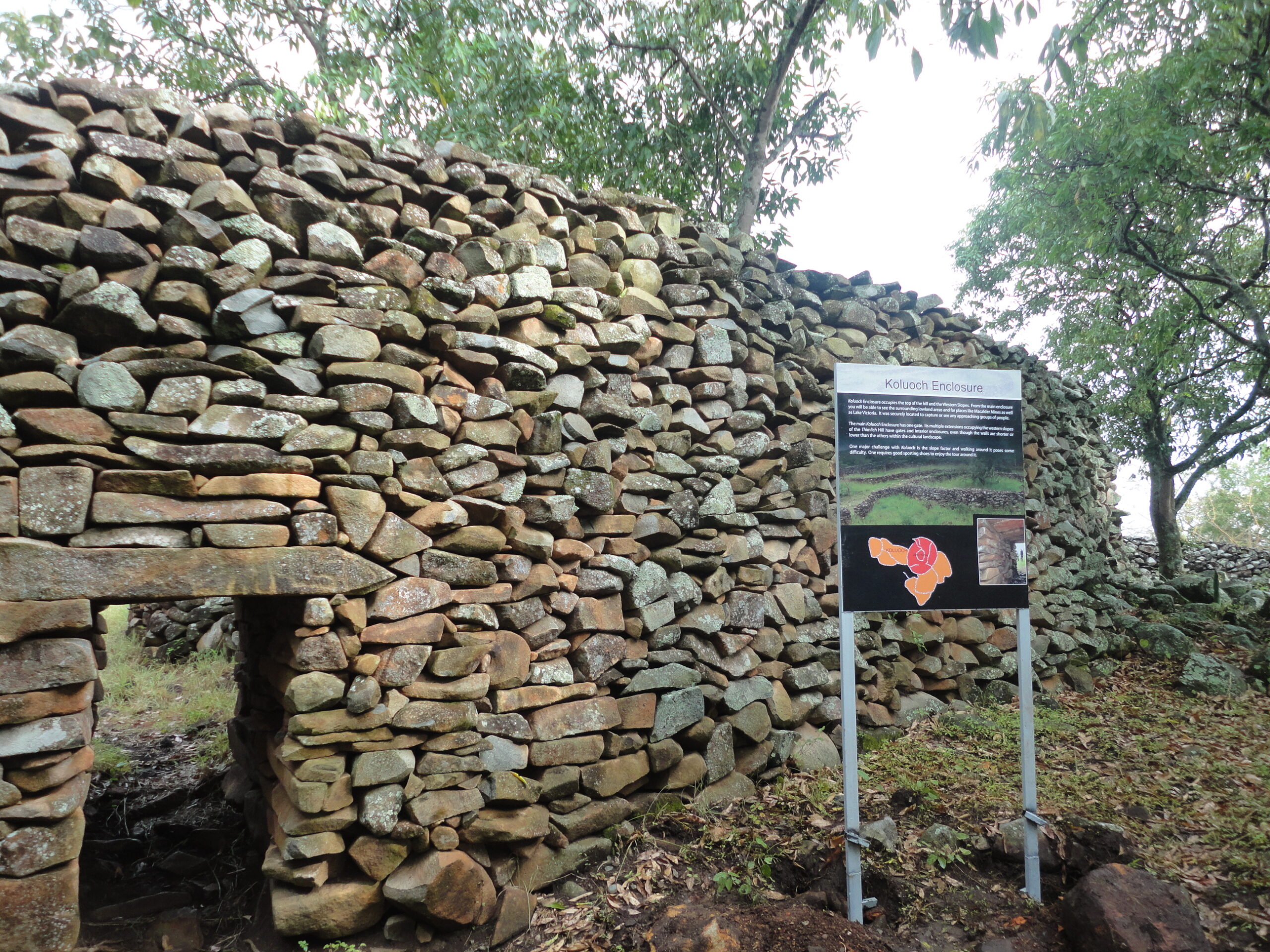
Thimlich Ohinga is the reason to make the detour. It’s a UNESCO World Heritage Site (inscribed 2018) and the largest and best-preserved of over 500 dry-stone enclosures scattered across the Lake Victoria Basin – built without any mortar, its walls run 1 to 4.2 metres high and up to 3 metres thick, made from undressed local basalt stones fitted together with a precision that still isn’t fully understood. The name is Dholuo: thimlich means a frightening, dense forest, and ohinga means a large fortress – a fitting description for a structure hidden in the bush 46km northwest of Migori town. Construction is generally dated to the 15th or 16th century, likely started by Bantu-speaking communities before Luo groups settled and expanded it over the following centuries; the four main enclosures (Kochieng, Kakuku, Koketch and Koluoch) probably worked as fortified homesteads, protecting people and livestock from raiders while also marking out lineage and status. It’s often compared, on a smaller scale, to Great Zimbabwe over 3,000km to the south – a similar dry-stone tradition arrived at independently. Getting there takes real effort (a rough road from Migori town, best with a 4×4 or a local guide), and the site itself is quiet even by Kenya’s already-uncrowded heritage-site standards, which is part of what makes it worth the trip.
Migingo Island
Just offshore in Lake Victoria sits one of the odder footnotes in East African geography: Migingo Island, a rock barely half the size of a football pitch, claimed by both Kenya and Uganda and, at times, home to several hundred fishermen packed into corrugated-iron shacks built almost on top of each other. The draw is Nile perch – the deep water around Migingo is some of the richest fishing ground left in the lake – and the dispute has rumbled on for two decades, largely resolved in Kenya’s favour by a 2009 joint survey that placed the island about 510 metres inside Kenyan waters, though friction over fishing rights in the surrounding lake continues. It isn’t a tourist site as such (there’s no formal way to visit, and conditions on the island are rough), but a boat trip out from Muhuru Bay or Karungu that passes within sight of it is a good way to understand just how much this stretch of the lake still runs on fish.
Things to do
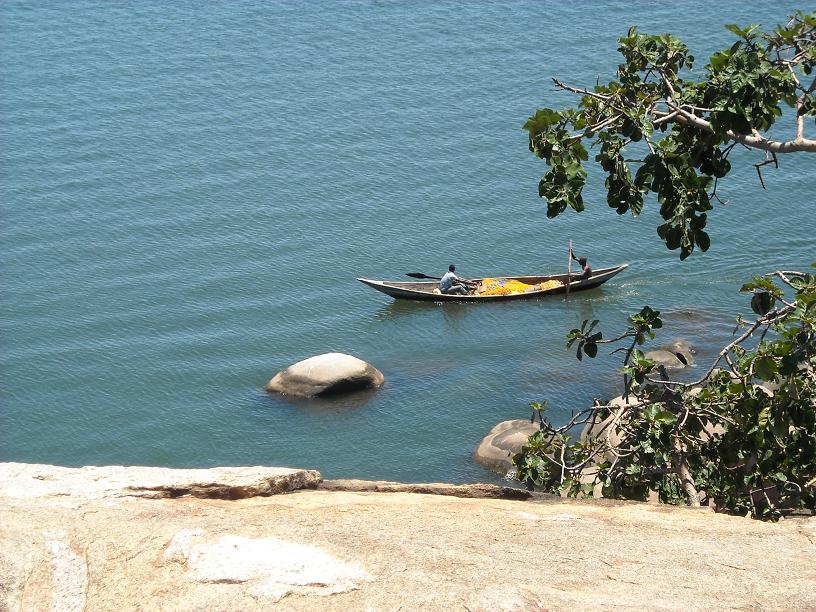
Muhuru Bay. A lakeside town near the Tanzanian border with some of the best sunset views on the Kenyan side of Lake Victoria, plus a working pier and fish landing scene similar in spirit to Homa Bay’s, just far smaller and quieter.
Gogo Falls. A waterfall on the Kuja River near Awendo, with a hydroelectric plant (commissioned in 1957, originally to power the Macalder mines) and an associated prehistoric site nearby that points to very early human presence in the area.
Macalder Mines. The site of Kenya’s most significant historical gold rush, discovered in 1904 with serious mining activity through the 1920s and 30s – now a quiet, half-abandoned mining landscape rather than an operating attraction, but a striking one for anyone interested in Kenya’s colonial-era industrial history. Small-scale artisanal gold mining still continues informally in parts of the county.
Kuria culture. Southern Migori, toward the Tanzanian border around Kehancha and Isibania, is Kuria territory – a Bantu community distinct from the Luo majority elsewhere in the county, with their own age-set governance traditions and a history of cross-border ties into northern Tanzania.
Getting there
Migori town is about 400km (6-7 hours) from Nairobi by road, most commonly via Kisii, and roughly 90km (1.5-2 hours) south of Kisumu. It also sits just 22km from the Tanzanian border at Isebania/Sirare, making it a realistic overland crossing point if you’re continuing on to the Serengeti or Mwanza. There’s no scheduled passenger airport in the county, so this is self-drive or bus-and-matatu territory.
Best time to visit
Like the rest of the Lake Victoria basin, Migori sees rain most of the year, heaviest from March to May with a shorter spell around October-November. December to February is generally the most reliable window, and it’s also the easiest time to manage the rough road out to Thimlich Ohinga.
FAQ
Can I actually visit Thimlich Ohinga? Yes – it’s open to the public and managed by the National Museums of Kenya, though facilities are basic. A local guide or driver familiar with the access road makes the visit far easier.
Is Migingo Island open to visitors? Not in any formal tourist sense – it’s a working fishing settlement, not a destination, and there’s no infrastructure for visitors to land or stay.
Is Migori worth a special trip, or only if I’m crossing into Tanzania? Thimlich Ohinga alone is worth a dedicated day if you’re already in the Kisumu-Kisii-Homa Bay area; for most other travellers, Migori makes most sense combined with a Tanzania border crossing or a longer western Kenya loop.
Related
- Homa Bay Travel Guide — the lake’s fish market towns, just up the shore
- Kisii Travel Guide — soapstone country, on the road in from Kisumu
- Kenya Travel Guide — plan the wider trip
Leave a Reply