Kakamega Forest is the one place in Kenya where a safari looks nothing like a savanna. It’s the country’s only tropical rainforest – the easternmost surviving fragment of the Guineo-Congolian forest that once stretched across central Africa – and it sits, improbably, in the middle of Western Kenya’s densely farmed sugar and tea country, about 55km north of Kisumu. Almost nobody puts it on a first Kenya trip, which is exactly why the handful of travellers who do make it here tend to come away talking about it more than the Mara.
Why it’s genuinely different
Kakamega’s plants, birds and primates have more in common with the forests of Uganda and the Congo than with anything else in Kenya, because this patch is a genetic island – cut off from its parent rainforest for so long that many of its species exist nowhere else in the country. Over 330 bird species have been recorded here, some 16 of them found nowhere else in Kenya, alongside seven primate species and more than 400 types of butterfly. It’s a UNESCO-recognised Important Bird Area, and for birders specifically, it’s often described as one of the best sites in East Africa.
Things to do
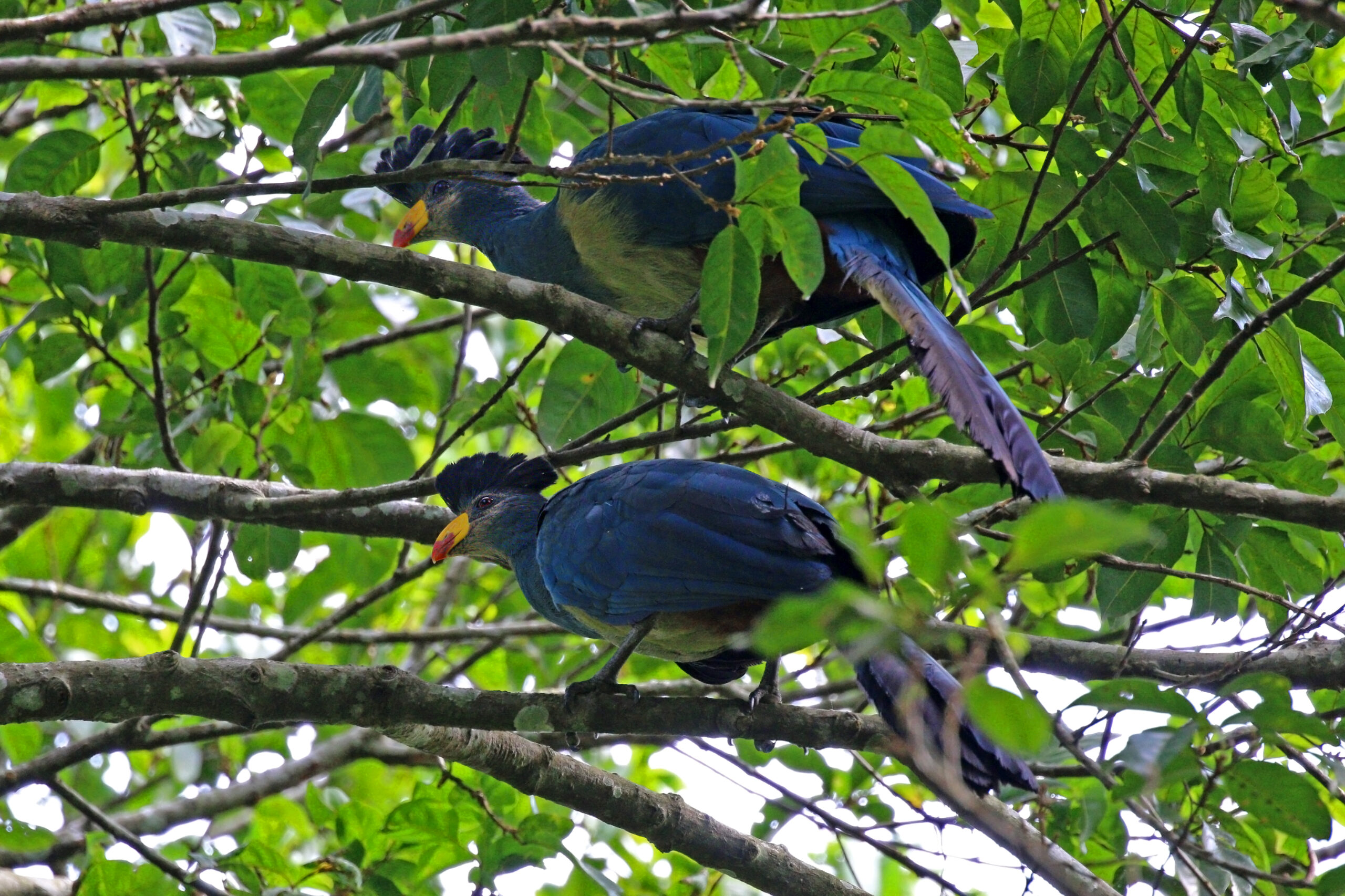
Birding. The headline draw. Target species include the Great Blue Turaco (a genuinely startling bird – electric blue with a bright yellow-and-red bill, look for it crashing clumsily between canopy branches), Turner’s eremomela and Chapin’s flycatcher (both globally threatened), the blue-headed bee-eater, and the African grey parrot. A knowledgeable local guide, who’ll know which tree a nesting crowned eagle is using that week, makes an enormous difference to what you actually see.
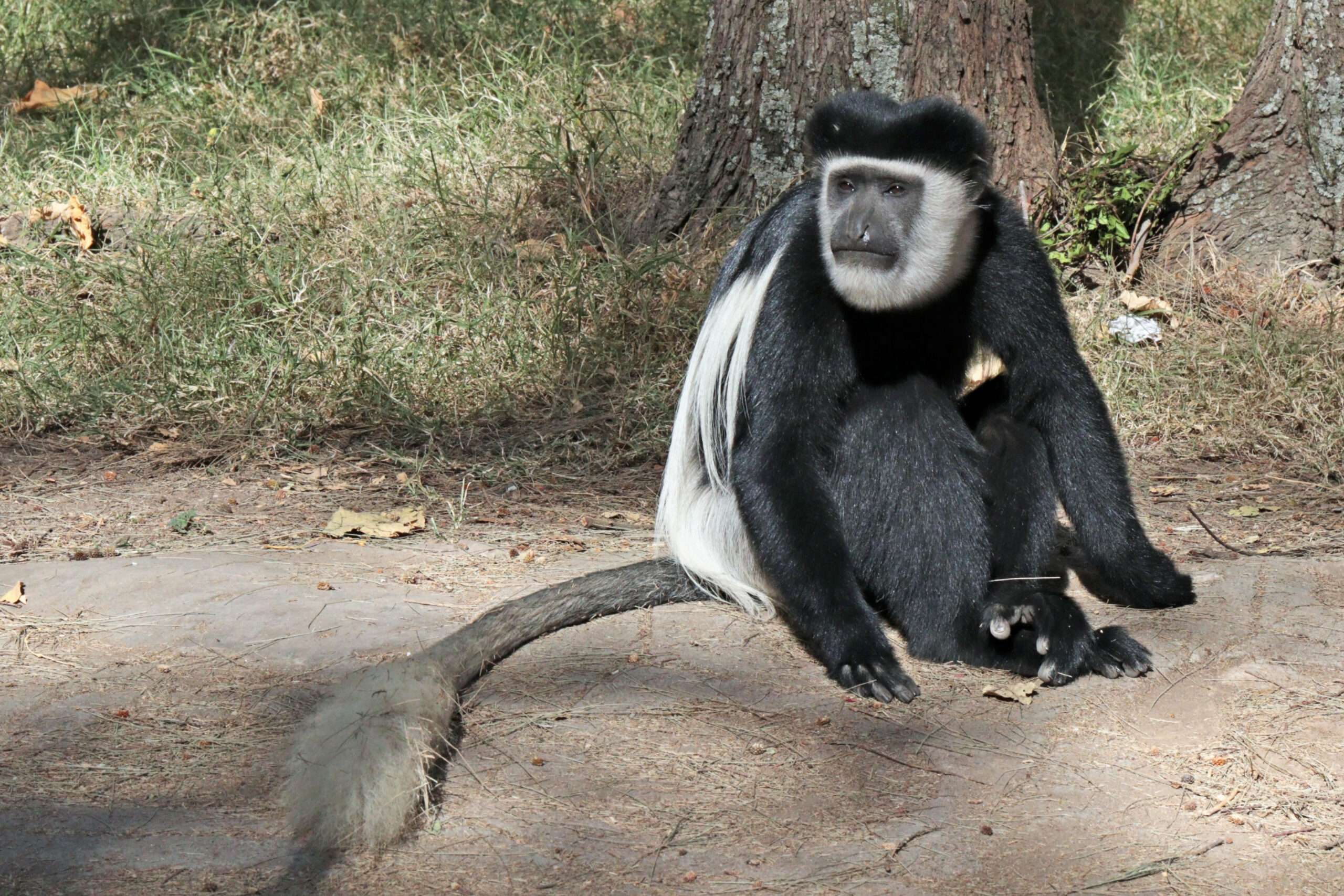
Primate watching. Black-and-white colobus, red-tailed monkeys, blue monkeys and olive baboons are all reliably spotted along the trails. The forest’s star is the de Brazza’s monkey – a striking, white-bearded, orange-browed species confined in Kenya to the Kisere sector of the national reserve – alongside nocturnal primates like the potto and Demidoff’s galago, best found on a guided night walk.
Walking trails. Marked trails range from short 1km loops to the half-day Isiukhu Trail, which runs from Isecheno to the small Isiukhu Falls. The 4km walk or drive up to Buyangu Hill is shorter and rewards you with uninterrupted views east across the forest canopy to the Nandi Escarpment. Expect thick red mud after rain – proper footwear matters here more than on any savanna game drive.
Old mine shafts and giant fig trees. Scattered through the forest are the remains of old mining activity, now used by roosting bats, and a scatter of genuinely enormous fig trees, some reputedly centuries old.
Two forest sectors, two experiences
Kakamega is split between the Kakamega Forest Reserve (run by the Kenya Forest Service, with Rondo Retreat as its best-known lodge, built on the site of a former timber mill) and the Kakamega Forest National Reserve to the north (run by Kenya Wildlife Service, home to the Buyangu sector and the rare de Brazza’s monkey territory in Kisere). Both are worth knowing about when you’re booking, since guides, entry fees and facilities differ between the two.
The Luhya communities around the forest
The forest sits in the heart of Luhya country – Kenya’s second-largest ethnic group, made up of around 18 distinct Bantu subgroups. The Isukha and Idakho, two of those subgroups, are the communities most directly associated with Kakamega itself, historically dependent on the forest for building materials, medicinal plants and bushmeat before conservation restrictions tightened. Circumcision remains an important, still-practised rite of passage among most Luhya subgroups (though not universally – some neighbouring groups, particularly those closer to Luo communities, don’t circumcise), traditionally marking the transition from boyhood to adulthood with an elaborate, community-wide ceremony. If you’re travelling with a local guide, it’s worth asking about which subgroup’s land you’re passing through – Luhya identity is genuinely plural rather than a single homogeneous culture.
Getting there
Kakamega town is about 55km (roughly an hour) north of Kisumu and around 350km from Nairobi by road. Most visitors combine it with a wider Kisumu-based western Kenya loop rather than visiting as a standalone destination, since there’s no direct scheduled air service to the forest itself.
Best time to visit
Rain falls year-round in this part of Kenya, and Kakamega is wetter than almost anywhere else in the country – come prepared for mud regardless of season. The driest stretches are typically December to February and June to August, which also tend to be the easiest months for birding since trails are less waterlogged.
FAQ
Do I need a guide? Technically no, but practically yes – the forest is dense, trails fork often, and a guide is the difference between hearing birds and actually seeing the species you came for.
Is Kakamega worth it if I’m not a serious birder? Yes, if you enjoy walking, primates or simply want to see rainforest rather than savanna – but birders will get the most out of it by a wide margin.
Can I combine Kakamega with Kisumu in one trip? Easily – it’s a comfortable day trip or overnight from Kisumu, and pairs naturally with the rest of a western Kenya itinerary.
Related
- Kisumu Travel Guide — the nearest city and usual base
- Kisii Travel Guide — soapstone country, further south
- Kenya Travel Guide — plan the wider trip
Leave a Reply